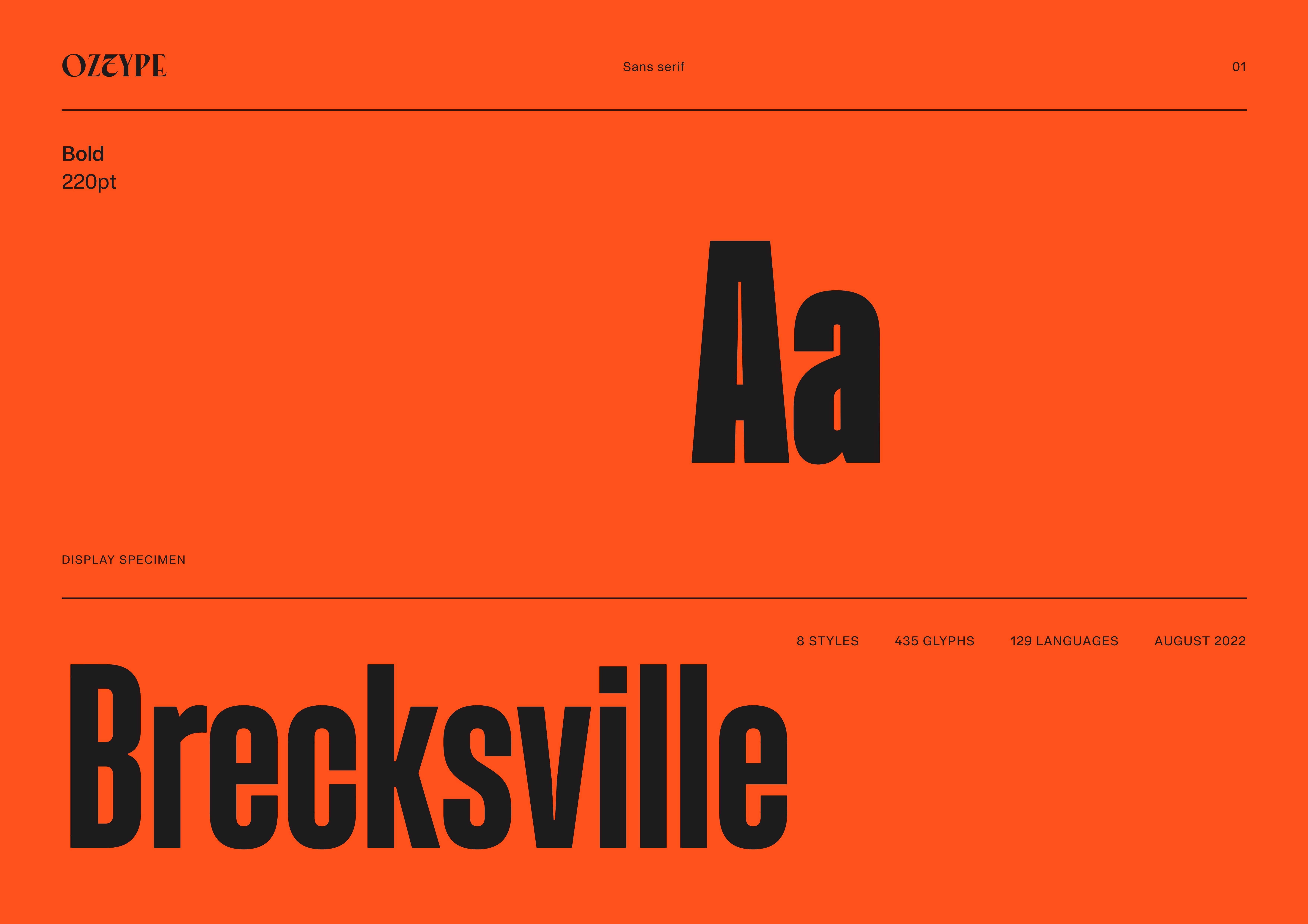
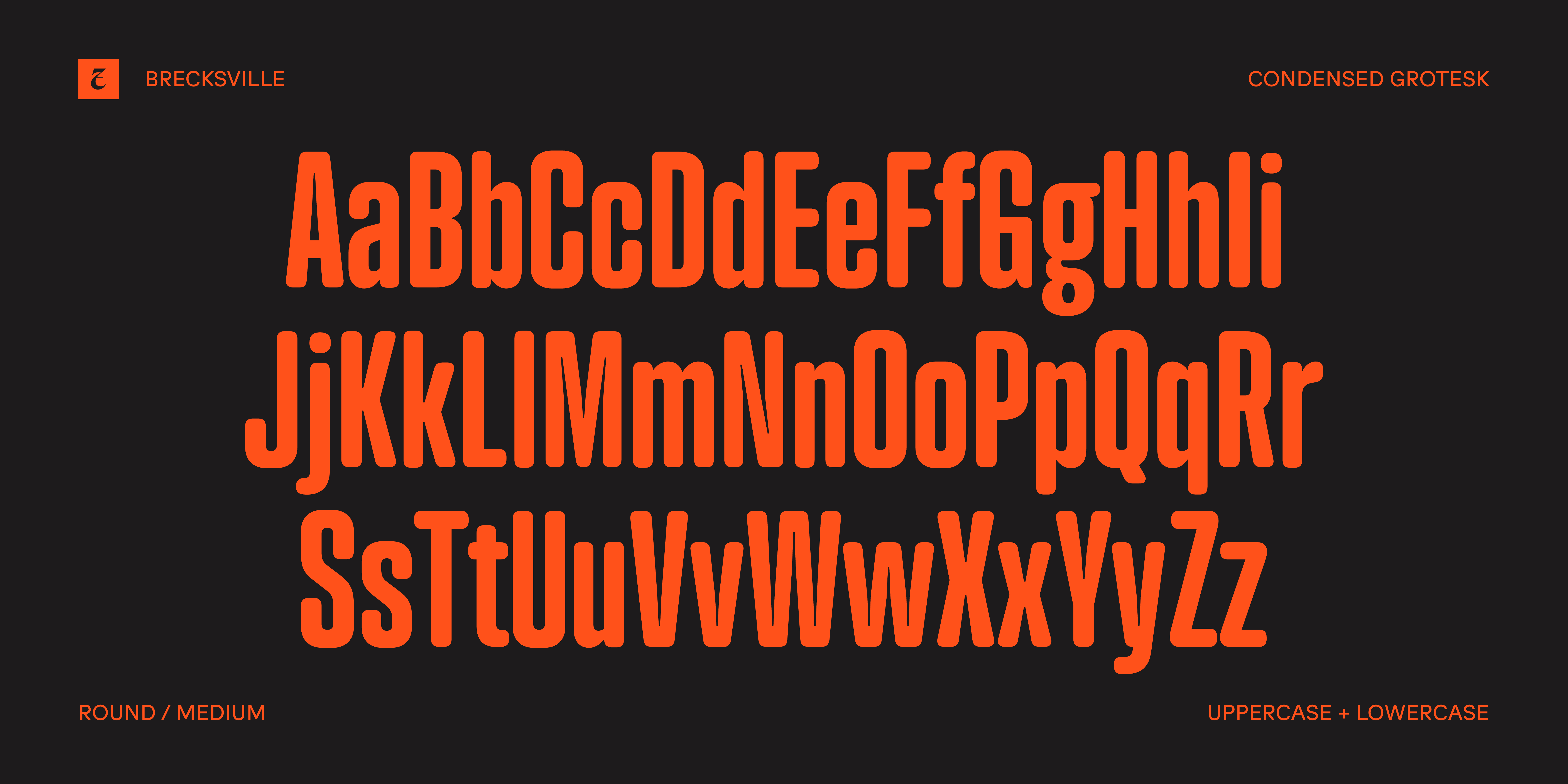
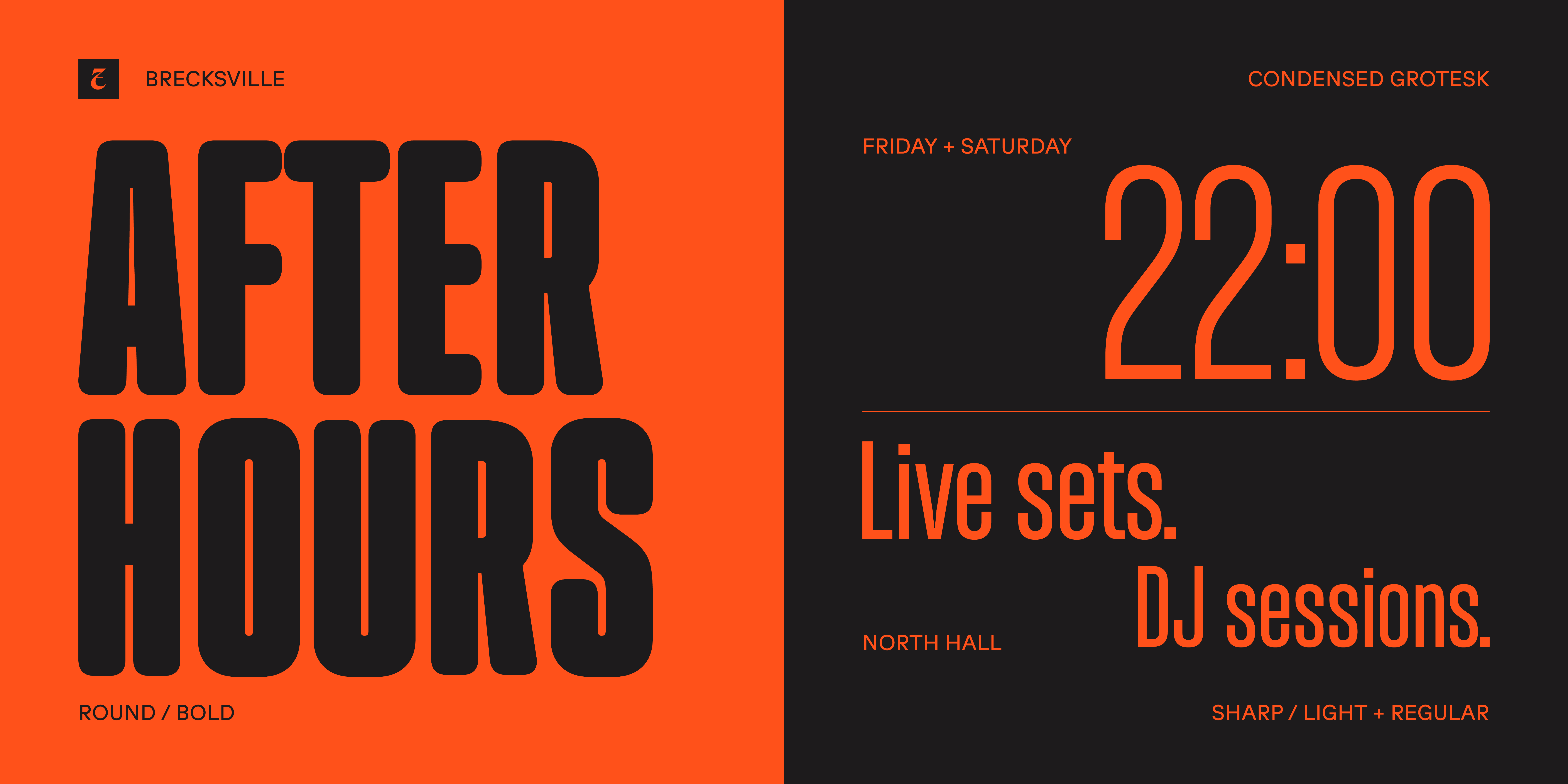
Brecksville

01

Type Tester

Editable
Size320px
Weightwght300
Roundrund1
Light · Sharp
Size399px
Leading0.92
Tracking0
Align
Flow
Grandstand
Weightwght300
Roundrund1
Light · Round
Size440px
Leading0.92
Tracking0
Align
Flow
Clubhouse
Weightwght300
Roundrund100
Regular · Sharp
Size539px
Leading0.92
Tracking0
Align
Flow
Baseline
Weightwght400
Roundrund1
Regular · Round
Size477px
Leading0.92
Tracking0
Align
Flow
Courtside
Weightwght400
Roundrund100
Semi Bold · Sharp
Size460px
Leading0.92
Tracking0
Align
Flow
Matchday
Weightwght600
Roundrund1
Semibold · Round
Size427px
Leading0.92
Tracking0
Align
Flow
Playmaker
Weightwght600
Roundrund100
Bold · Sharp
Size478px
Leading0.92
Tracking0
Align
Flow
Scoreline
Weightwght700
Roundrund1
Bold · Round
Size414px
Leading0.92
Tracking0
Align
Flow
Homecourt
Weightwght700
Roundrund100

Track meet

Light · Sharp · 32px · 3 columns
Size32px
Leading1.12
Tracking0
Align
Flow
By eight in the morning the athletics field is already divided into clear zones. Volunteers carry hurdles from the storage shed, place lane markers beside the track, and tape printed heat sheets to a board near the entrance. The first runners arrive in small groups wearing warm-up layers over their race kits. Some walk the bends to check the surface, while others settle into familiar routines of drills, short strides and quiet stretching. At the registration table, bib numbers are sorted alphabetically and spare safety pins collect in a shallow tray. Coaches compare start lists and make last-minute changes when an athlete withdraws. The crowd is still thin enough for announcements to travel easily across the field. As the first event approaches, the infield becomes busier. Officials carry measuring tapes toward the jumping area, marshals gather competitors behind numbered signs, and families move toward the rail with coffee and folding chairs. Once the starter raises an arm, the morning changes pace. Conversations stop, athletes lean forward, and a few seconds of silence hold the entire track before the first race begins. Then officials reset the track for another heat.
Weightwght300
Roundrund1

Home court

Light · Sharp · 48px · 2 columns
Size48px
Leading1.20
Tracking0
Align
Flow
The basketball hall looks completely different an hour before tip-off. The court is empty, the scoreboards are dark, and rows of seats are still folded against the wall. Staff move through the space checking nets, wiping the painted lines and placing water beside each bench. A ball rolls from one end of the floor to the other and sounds louder than it will once the crowd arrives. When the teams come out to warm up, the room fills quickly with repeated passes, squeaking shoes and short bursts of music. The first spectators choose seats near half court while younger players gather close to the rail for a better view. By the time the starting lineups are announced, every part of the hall has shifted from preparation to performance.
Weightwght300
Roundrund1

Weekend club

Light · Round · 32px · 3 columns
Size32px
Leading1.12
Tracking0
Align
Flow
A neighbourhood sports club opens its weekend programme with a noticeboard full of overlapping activities. One group is heading to the outdoor courts, another is meeting in the studio upstairs, and a junior team is collecting shirts before an afternoon fixture. At the front desk, parents ask about membership dates while volunteers explain which sessions still have space. The club does not run like a single team; it works more like a shared timetable in which different ages and interests use the same rooms throughout the day. Equipment moves constantly between storage cupboards and playing areas. Cones disappear after a morning drill and return beside a children's class an hour later. Folding tables become registration desks, then refreshment stations, then places to sort medals before evening. The busiest periods are not always the loudest. Around lunchtime, when several groups cross at once, staff rely on clear signs and simple routines to keep people moving in the right direction. New members usually learn the building by following everyone else. After a few visits, they know which door leads to the changing rooms, where spare rackets are kept, and which corner of the lounge gets the afternoon sun. Later, volunteers stack chairs and close the hall.
Weightwght300
Roundrund100

Pool session

Light · Round · 48px · 2 columns
Size48px
Leading1.20
Tracking0
Align
Flow
At the community pool, the first lesson begins while the water is still almost flat. Floats are stacked by colour, lane ropes are pulled into place, and instructors write the day's groups on a whiteboard beside the shallow end. Younger swimmers enter carefully, testing the temperature before moving toward their markers. A few parents stay close to the glass while older children begin laps in the next lane. The session is structured but never silent: names are called, instructions are repeated, and bursts of splashing interrupt every explanation. By midday the pool has changed from a teaching space into open swimming, with the same lanes serving a completely different rhythm.
Weightwght300
Roundrund100

Training ground

Regular · Sharp · 32px · 3 columns
Size32px
Leading1.12
Tracking0
Align
Flow
Training starts with the simplest movement on the pitch: receive the ball, turn, pass, move again. The pattern is repeated until players stop thinking about where they should stand and begin to react to the next space opening around them. Coaches keep the area deliberately small so that decisions have to be quick. A poor first touch removes an option immediately; a well-timed pass creates two more. After the opening drills, the markers are widened and the group splits into teams for a possession game. There are no fixed positions, only zones that must be occupied and vacated at the right moment. The session becomes louder as players call for the ball and remind one another to press, cover or switch. Short breaks are used to change one rule at a time rather than reset everything. In one round, the team must play forward within three passes. In the next, a point only counts if every player has crossed the halfway line. The restrictions make familiar movements feel new and reveal habits that are easy to hide in a full match. Near the end, the cones are removed and the group plays freely. The pitch suddenly feels enormous. Players stretch, laugh, and carry the cones back.
Weightwght400
Roundrund1

Evening league

Regular · Sharp · 48px · 2 columns
Size48px
Leading1.20
Tracking0
Align
Flow
The tennis courts are prepared long before the evening league begins. Leaves are cleared from the baselines, nets are checked for height, and a small brush is used to remove loose material from the painted edges. Players arrive gradually, carrying bags that seem far too large for the few objects they use during a match. Most spend the first minutes hitting gently from inside the service boxes, finding timing before distance. As the light softens, the courts become more animated. Balls travel deeper, serves become louder, and conversations between points grow shorter. The final check is simple: fresh balls on each court, scorecards in place, and enough time for everyone to begin together.
Weightwght400
Roundrund1

Tournament hall

Regular · Round · 32px · 3 columns
Size32px
Leading1.12
Tracking0
Align
Flow
A weekend volleyball tournament depends on a surprising amount of movement away from the net. Teams arrive with bags, jackets and water bottles that need somewhere to go between matches. Organisers rotate courts, update brackets and make sure the next pair of teams is ready before the previous whistle. Players spend as much time watching as competing, studying unfamiliar opponents from the side and learning which hitters favour sharp angles or deep corners. Warm-up areas become temporary meeting points where coaches adjust lineups and players compare notes. Because several matches run at once, the building carries layers of sound: whistles from one court, applause from another, shoes stopping suddenly on the floor, and announcements trying to rise above all of it. The schedule only works if transitions stay quick. As soon as a match ends, one team gathers its belongings while the next begins passing. Nets remain fixed, but almost everything around them changes. By late afternoon the early rounds have narrowed into a smaller group of teams, and spectators who arrived for one match begin staying for the next. Finalists return after a short break between rounds.
Weightwght400
Roundrund100

Club day

Regular · Round · 48px · 2 columns
Size48px
Leading1.20
Tracking0
Align
Flow
The annual club day turns the playing fields into a collection of small events rather than one competition. Children try short races near the clubhouse, families join mixed teams for casual games, and older members volunteer at tables scattered around the grounds. There is no single result that matters. The point is to keep enough activity happening that people can move between watching, joining and resting without waiting for long. By the middle of the afternoon, unfamiliar teammates are calling one another by name and borrowed equipment has travelled far from the place where it started. The day ends with everyone returning balls, cones and folding chairs to storage before the final group photograph.
Weightwght400
Roundrund100

Alternate forms

Single-storey a & g
Size82px
Leading1.12
Tracking0
Align
Flow
A great game can change again and again.
Weightwght400
Roundrund1

Scoreboard

Case-sensitive punctuation
Size92px
Leading1.12
Tracking0
Align
Flow
HOME [84] — AWAY [79] @ 19:30
Weightwght700
Roundrund1

Club identity

Half-round axis
Size84px
Leading1.12
Tracking0
Align
Flow
Northside Athletic Club — Spring League
Weightwght600
Roundrund51

Court booking

Digital interface
Size76px
Leading1.12
Tracking0
Align
Flow
Book a court · Saturday 10:30 · 2 players
Weightwght400
Roundrund100

Spieltag

Deutsch
Size62px
Leading1.12
Tracking0
Align
Flow
Am Samstag beginnt das Heimspiel um 18:30 Uhr. Einlass ist ab 17:15 Uhr.
Weightwght400
Roundrund1
02

Glyph Map

Loading Light…
AU+0041
100%
Glyph name
—
Unicode
U+0041
Decimal
65
Advance
—
Sidebearings
—
01/10

Specimens

2:1
Brecksville: Brecksville specimen artwork — Accented places
04

Information

2022

Family

Brecksville

Sans
8 styles
Latin
Released 2022

Variable and static OpenType formats.

Brecksville

Born from Oussama Horchani’s historical research into nineteenth-century German media, Brecksville is a condensed grotesque engineered for modern high-impact layouts. The family pairs a rugged, sharp primary cut with rounded Display counterparts, sharing identical metrics to allow seamless stylistic mixing without text reflow. Optimized for screens, its tight horizontal proportions and aggressive presence bring a punchy, crowded editorial gravity to headlines and digital branding.

Technical

Metrics

Reading font data…

Axes

Variable axes: Weight (wght) 300–700, Round (rund) 1–100.

Features

OpenType layout data is included in the font files.

Credits

Designed and released by Oztype in 2022.

Information

2022

Family

Brecksville

Classification
Sans
Styles
8 styles
Format
Variable + static OpenType
Scripts
Latin
Designer
Oussama Horchani
Brecksville PDF specimen cover
Download PDF specimen
Get trial fonts

About

Born from Oussama Horchani’s historical research into nineteenth-century German media, Brecksville is a condensed grotesque engineered for modern high-impact layouts. The family pairs a rugged, sharp primary cut with rounded Display counterparts, sharing identical metrics to allow seamless stylistic mixing without text reflow. Optimized for screens, its tight horizontal proportions and aggressive presence bring a punchy, crowded editorial gravity to headlines and digital branding.

Specifications

Glyphs
435

Variable axes

Weightwght300 — 700
Roundrund1 — 100

OpenType features

Access All Alternatesaalt
Case-Sensitive Formscase
Glyph Composition / Decompositionccmp
Denominatorsdnom
Kerningkern
Standard Ligaturesliga
Localized Formslocl
Mark Positioningmark
Numeratorsnumr
Stylistic Alternatessalt
Single-storey a & gss01

Supported Languages

129 supported

Latin

  • Afar
  • Afrikaans
  • Aragonese
  • Asu
  • Bemba
  • Bena
  • Bosnian
  • Catalan
  • Cebuano
  • Chiga
  • Corsican
  • Czech
  • Welsh
  • Danish
  • Taita
  • German
  • Lower Sorbian
  • Jola-Fonyi
  • Embu
  • English