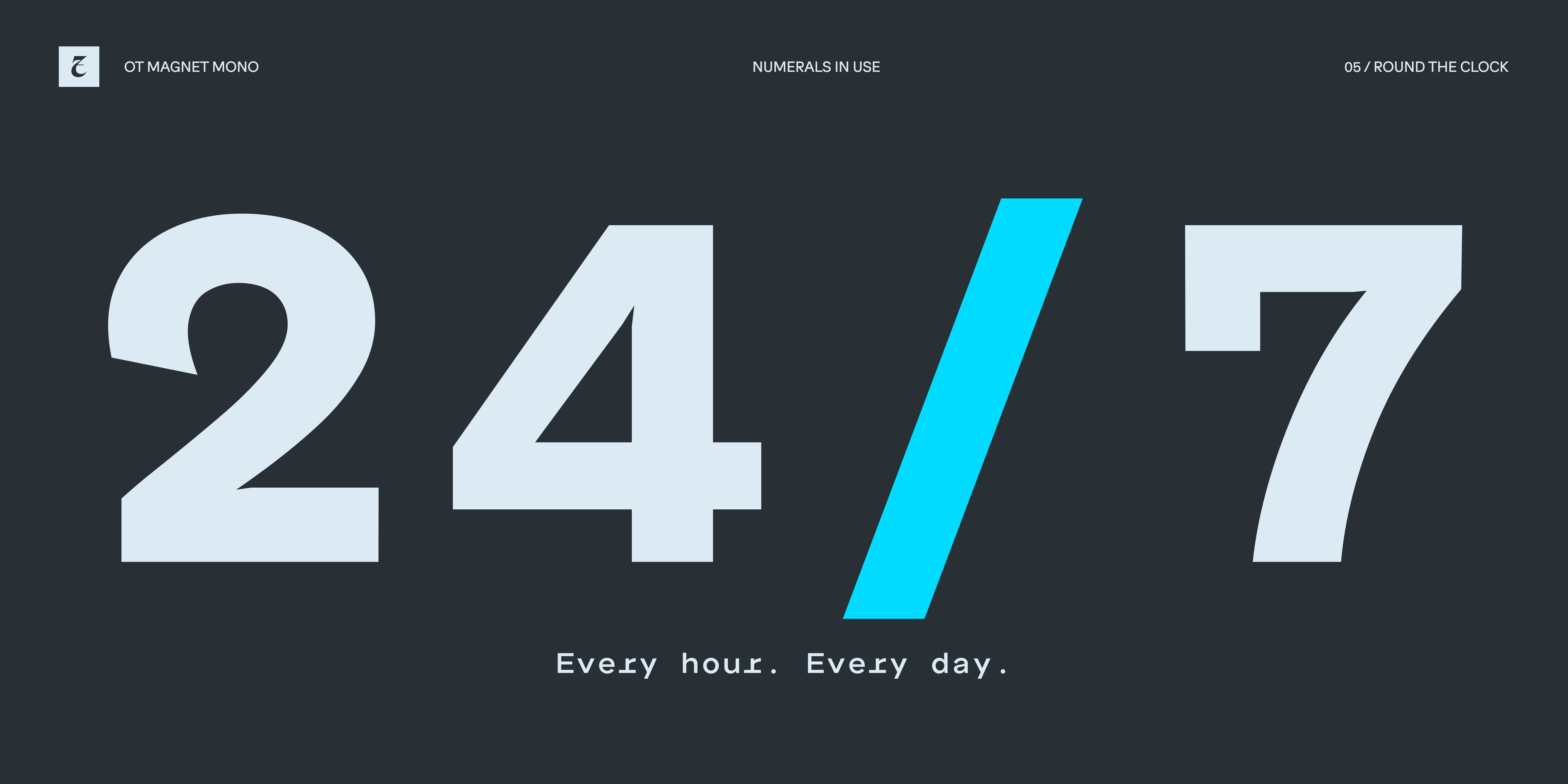
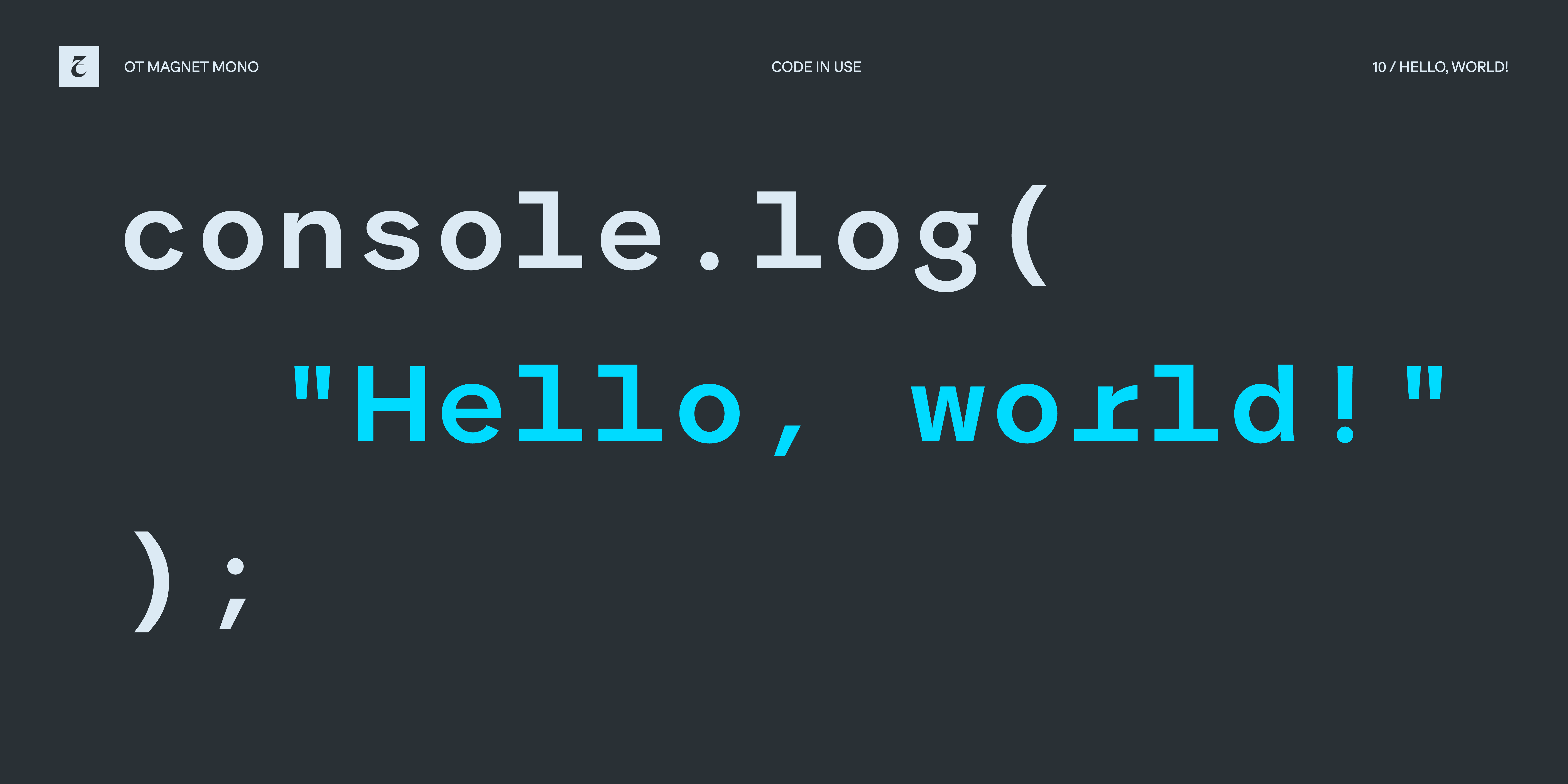
OT Magnet Mono

01

Type Tester

Editable
Size80px
Weightwght100
Mono Thin
Size154px
Leading0.92
Tracking0
Align
Flow
Telemetry
Weightwght100
Mono Light
Size173px
Leading0.92
Tracking0
Align
Flow
Latitude
Weightwght214
Mono Regular
Size173px
Leading0.92
Tracking0
Align
Flow
Protocol
Weightwght329
Mono Book
Size173px
Leading0.92
Tracking0
Align
Flow
Registry
Weightwght443
Mono Medium
Size173px
Leading0.92
Tracking0
Align
Flow
Spectrum
Weightwght557
Mono Bold
Size173px
Leading0.92
Tracking0
Align
Flow
Checksum
Weightwght671
Mono Heavy
Size173px
Leading0.92
Tracking0
Align
Flow
Datagram
Weightwght786
Mono Black
Size173px
Leading0.92
Tracking0
Align
Flow
Blackbox
Weightwght900
Light · 14px · 3 columns
Size14px
Leading1.55
Tracking0
Align
Flow
Before sunrise, a weather team lays a silver balloon across a clean sheet beside a small instrument case. The radiosonde is no larger than a lunch box, but it carries sensors for temperature, pressure and humidity, a receiver for position, and a transmitter that will report every few seconds after release. One person checks the batteries while another enters the launch code and compares the ground reading with a shaded reference thermometer. Wind at the surface is almost still. Higher up, the forecast shows a narrow current moving quickly from west to east. When the balloon is filled, it rises above the technicians on a short line and pulls steadily against the gloves holding it down. The package is attached beneath a lightweight reel, the transmitter is heard once more through the receiver, and the final values are written into the log. At the chosen minute the line is released. The balloon climbs vertically for the first few hundred metres, then begins to drift. On the screen inside the trailer, a new row of numbers appears every two seconds. Pressure falls, temperature changes sharply near a layer of cloud, and the plotted path bends as the balloon enters faster air. The team no longer needs to see it. For the next hour the flight exists as coordinates, heights and measurements arriving over radio. Long after the balloon has disappeared into bright morning sky, its trace continues upward across the display.
Weightwght214
Light · 18px · 2 columns
Size18px
Leading1.50
Tracking0
Align
Flow
Across a high plateau, snow depth is measured by a row of simple instruments fixed above the winter surface. Each mast carries a temperature probe, a small sonic rangefinder and a low-power transmitter protected inside a sealed box. In autumn the sensors stand well above the ground. By midwinter only their upper sections remain visible. Every hour a short packet reports the distance from the sensor to the snow, allowing the changing depth to be reconstructed without anyone crossing the slope. After a storm, the readings can change by half a metre overnight. During clear weather the surface settles slowly and the numbers move in smaller steps. Once a month a field team arrives on skis to check the equipment, brush ice from the housings and compare the electronic values with a manual gauge. The visit is brief. Most of the season is recorded remotely, one timestamp after another, until spring exposes the lower bolts again.
Weightwght214
Regular · 14px · 3 columns
Size14px
Leading1.55
Tracking0
Align
Flow
After sunset, the radio array begins a calibration sequence that moves from dish to dish across the plain. Each antenna turns toward the same bright reference source, pauses, and sends a short stream of measurements to the control room. The process looks repetitive from outside, but the numbers reveal small differences in timing that must be corrected before the instruments can operate as one system. A technician watches several plots at once: phase on one screen, signal strength on another, and a map showing which receivers are ready. When an outlying value appears, the corresponding channel is isolated and tested again. Sometimes the cause is a loose connection in a cabinet kilometres away. Sometimes the atmosphere itself has changed enough to shift the result. By midnight, the array is aligned closely enough to begin the night's observation. The dishes spread across the landscape are separated by large distances, yet their recordings are combined as if they belonged to a single instrument. Data accumulates faster than anyone could inspect directly. Software flags interruptions, monitors temperature in the electronics and records the exact state of each receiver. The observers concentrate on the exceptions. A sudden drop in one band may be interference from a passing aircraft. A narrow spike may come from a local transmitter. A consistent pattern across many antennas is something else entirely. Near dawn, the last scan ends and the dishes turn toward their resting positions. The room becomes quieter, but processing continues. Hours of observation are reduced, compared and archived so that the faintest useful signals can be separated from everything that happened around them.
Weightwght329
Regular · 18px · 2 columns
Size18px
Leading1.50
Tracking0
Align
Flow
A monitoring crew carries three compact seismometers along a volcanic ridge where the ground is too rough for vehicles. The sites were chosen weeks earlier from maps, but each final position is decided in person. Loose gravel is avoided. Flat bedrock is preferred. At the first site, a shallow cavity is cleared and the instrument is levelled until the bubble sits exactly inside its ring. A cable leads to a recorder and a small solar panel several metres away. Once powered, the sensor begins tracing movement too small to feel. Footsteps appear immediately as sharp disturbances, followed by a slower return to the normal background. The crew waits until the line settles before covering the instrument and saving its coordinates. By evening all three units are running. Their clocks are synchronized so later events can be compared precisely. A tremor arriving at different times across the ridge can reveal direction and depth. Most recordings are uneventful, which is exactly what the network needs: long stretches of quiet reference data surrounding the moments when the mountain moves.
Weightwght329
Book · 14px · 3 columns
Size14px
Leading1.55
Tracking0
Align
Flow
Far from shipping lanes, an autonomous ocean float spends most of its life below the surface. It descends slowly after deployment, drifts with deep currents for several days, then changes buoyancy and rises through the water column. During the ascent it records pressure, temperature and salinity at regular intervals. Nothing is transmitted until the antenna clears the sea. Once at the surface, the float determines its position and sends a compressed record through a satellite link. The message is brief enough to survive weak reception: identity, time, coordinates, instrument status and a sequence of measurements from the dive. A shore server checks the packet, stores the observations and returns any updated instructions. If communication succeeds, the float begins another cycle and disappears beneath the waves. Thousands of these instruments can operate without following fixed routes. Their paths are shaped by currents that may carry them hundreds of kilometres from the point where they entered the water. Scientists rarely see the devices again, yet their repeated profiles reveal how heat and salt are moving through the ocean. A single record is only a narrow vertical slice. Combined over months and across many floats, those slices become a moving picture of large regions. Batteries eventually weaken, sensors drift and some units stop responding without explanation. Until then, each surfacing adds another numbered message to an archive built from machines that spend most of their working lives out of sight.
Weightwght443
Book · 18px · 2 columns
Size18px
Leading1.50
Tracking0
Align
Flow
Inside a limestone cave, a survey team moves slowly through a chamber that has never been mapped in detail. A laser scanner is placed on a tripod near the centre and levelled before everyone steps out of its path. When the scan begins, the instrument rotates through a full circle, measuring the distance to walls, floor and ceiling thousands of times each second. The chamber is not drawn as lines. It appears first as a cloud of points, dense on nearby surfaces and sparse in the dark openings beyond. The scanner is moved several metres and the process is repeated from a second position. Later, overlapping features allow the two clouds to be joined. A small reflective target placed between setups helps confirm the alignment. By the end of the day, passages that seemed irregular by eye can be measured precisely: width at the narrowest point, height above a ledge, volume of a side chamber. Back at the entrance, the equipment is packed before the data is copied twice. The cave remains unchanged, but its geometry can now be examined without returning underground.
Weightwght443
Medium · 14px · 3 columns
Size14px
Leading1.55
Tracking0
Align
Flow
A satellite operations room is quietest when everything is working normally. The main displays show orbital position, battery state, temperatures and a steady stream of housekeeping values that change only slightly from one pass to the next. Several times each day, the spacecraft rises above the local horizon and becomes available to the ground antenna for a short contact window. The schedule is prepared in advance, but the exact acquisition time still matters. A controller loads the command sequence, confirms which recorder files are waiting, and checks that no earlier warning remains unresolved. As the predicted minute approaches, the antenna begins tracking. Carrier lock appears first, followed by telemetry. The room does not become dramatic; it becomes precise. Commands are sent in a deliberate order, each followed by confirmation from the vehicle. Stored observations begin transferring to the ground while new instructions are queued for the next orbit. If a value moves outside its expected range, the controller compares it with recent history before taking action. A warm component may simply be entering sunlight. A temporary drop in voltage may coincide with a planned load. Context matters as much as the number itself. The contact ends when the spacecraft falls below the horizon. The antenna returns to standby, the received files are handed to processing systems, and the operations log records what changed. Between passes, staff review trends, prepare later commands and simulate procedures that may never be needed. Routine is the goal. The best shift is one in which every event arrives when expected and every line in the log is ordinary.
Weightwght557
Medium · 18px · 2 columns
Size18px
Leading1.50
Tracking0
Align
Flow
Minutes before totality, a line of small cameras is already running beside a field of darkened telescopes. Their shutters are controlled by synchronized timers because the useful interval will be too short for improvisation. Each camera has been focused, tested and assigned a sequence of exposures ranging from fractions of a second to several seconds. The variation is deliberate: the bright inner corona requires one setting, faint structures farther from the Sun another. Observers check clocks rather than the sky. At the final cue, filters are removed from the instruments prepared for the total phase. The landscape dims quickly. A programmed series begins, recording image after image without anyone touching the cameras. For a brief period the equipment follows the plan exactly as written. Then the light returns, filters go back into place and the sequence stops. The photographs will take much longer to examine than they took to make. Their value depends on accurate timing, stable alignment and a record of every exposure used.
Weightwght557
Bold · 14px · 3 columns
Size14px
Leading1.55
Tracking0
Align
Flow
Deep underground, a detector hall operates behind layers of concrete and rock that screen out much of the radiation present at the surface. The experiment itself surrounds a target volume with rings of sensors, cables and electronics. Most of the time nothing important happens. That absence is useful because the events being sought are rare, and every unnecessary signal makes them harder to identify. Before a run begins, the electronics are tested channel by channel. A pulse of known size is injected, recorded and compared with the expected response. Channels that drift are marked for inspection. Temperature and voltage are logged continuously because small changes can alter the measurement enough to matter later. When data taking starts, the system works without waiting for a person to approve each event. Triggers select patterns that meet predefined conditions and write them to storage with an exact timestamp. Other activity is summarized or discarded. Operators watch rates rather than individual traces. A sudden increase may indicate electrical noise, maintenance in a nearby tunnel or a problem with the cooling system. A slow change can be harder to diagnose. The shift log therefore records details that seem unimportant at the time: a cabinet opened, a power supply replaced, a calibration delayed by ten minutes. Weeks later, those notes can explain a feature in the data. The detector is designed to observe phenomena that may be almost invisible, but doing so depends on an environment where ordinary changes are documented with unusual care.
Weightwght671
Bold · 18px · 2 columns
Size18px
Leading1.50
Tracking0
Align
Flow
In a quiet test room, a circular array of microphones surrounds a small loudspeaker mounted on a stand. The walls absorb reflections so that the direct sound can be measured without the room adding its own character. Before the first sweep, every channel is checked with the same reference tone. Levels that differ by more than a narrow tolerance are corrected or removed from the run. The loudspeaker then plays a signal that moves steadily from low frequencies to high ones. Each microphone records the response from a different angle. The result is not one curve but a set of related measurements showing how the device behaves around its full circumference. A second run changes only the distance. A third rotates the cabinet by a few degrees. Because the procedure is repetitive, labels and timestamps matter as much as the recordings themselves. At the end, the files are grouped by setup and the room returns to silence. Nothing visible has changed, yet the measurements now describe where the sound travels strongly, where it falls away and how consistently the pattern repeats.
Weightwght671

Analog array

ss01 + ss02
Size68px
Leading1.16
Tracking0
Align
Flow
A gauge array maps analog gain against gradual changes.
Weightwght443

Signal paths

Contextual arrows
Size64px
Leading1.16
Tracking0
Align
Flow
SENSOR_A -> HUB_03 <- SENSOR_B -> NODE_11
Weightwght329

Channel rings

ss10 · circled figures
Size42px
Leading1.16
Tracking0
Align
Flow
1 TEMP · 2 PRESS · 3 HUMID · 4 WIND · 5 LIGHT · 6 NOISE · 7 FLOW · 8 LOAD · 9 CLOCK
Weightwght329

Priority rings

ss11 · black circled figures
Size42px
Leading1.16
Tracking0
Align
Flow
1 CORE · 2 SYNC · 3 LINK · 4 INPUT · 5 CACHE · 6 QUEUE · 7 TIMER · 8 POWER · 9 SAFE
Weightwght557

Calibration ratios

Fractions
Size60px
Leading1.16
Tracking0
Align
Flow
GAIN 1/2 · DUTY 3/4 · SCALE 5/8 · PHASE 7/8
Weightwght443

Serial zeroes

Slashed zero
Size72px
Leading1.16
Tracking0
Align
Flow
00A0 · 0204 · 1008 · 4006 · 7009
Weightwght557

Lower indices

Subscript
Size78px
Leading1.16
Tracking0
Align
Flow
CH4 · CO2 · NO2 · H2S · O2
Weightwght329

Upper indices

Superscript
Size72px
Leading1.16
Tracking0
Align
Flow
x2 + y3 = z4 · 10² · 10³ · 10⁴
Weightwght329

Flow pairs

Standard ligatures
Size72px
Leading1.16
Tracking0
Align
Flow
field profile final filter flowline
Weightwght443

Messprotokoll

Deutsch
Size52px
Leading1.16
Tracking0
Align
Flow
Die Messstation überträgt jede Stunde Temperatur, Luftdruck und Spannung an das zentrale Archiv.
Weightwght329
02

Glyph Map

Loading Mono Regular…
AU+0041
100%
Glyph name
—
Unicode
U+0041
Decimal
65
Advance
—
Sidebearings
—
01/10

Specimens

2:1
OT Magnet Mono: OT Magnet Mono specimen artwork — Equal measure
04

Information

2026

Family

OT Magnet Mono

Mono
8 styles
Latin
Released 2026

Variable and static OpenType formats.

OT Magnet Mono

OT Magnet Mono translates the large x-height, circular counters, and crisp diagonals of the original geometric grotesque into a rigid fixed-width system. Sharing an identical fixed advance across eight upright weights (Thin to Black), it offers an exceptionally even typographic rhythm and stable alignment. Equipped with a master Variable Font for continuous weight control, it pairs the strict order of a monospaced layout with an approachable, high-impact branding personality.

Technical

Metrics

Reading font data…

Axes

Variable axes: Weight (wght) 100–900.

Features

OpenType layout data is included in the font files.

Credits

Designed and released by Oztype in 2026.

Information

2026

Family

OT Magnet Mono

Classification
Mono
Styles
8 styles
Format
Variable + static OpenType
Scripts
Latin
Designers
Oussama Horchani, Jack Wilson
OT Magnet Mono PDF specimen cover
Download PDF specimen
Get trial fonts

About

OT Magnet Mono translates the large x-height, circular counters, and crisp diagonals of the original geometric grotesque into a rigid fixed-width system. Sharing an identical fixed advance across eight upright weights (Thin to Black), it offers an exceptionally even typographic rhythm and stable alignment. Equipped with a master Variable Font for continuous weight control, it pairs the strict order of a monospaced layout with an approachable, high-impact branding personality.

Specifications

Variable axes

Weightwght100 — 900

OpenType features

Access All Alternatesaalt
Contextual Alternatescalt
Glyph Composition / Decompositionccmp
Denominatorsdnom
Fractionsfrac
Standard Ligaturesliga
Localized Formslocl
Mark Positioningmark
Mark-to-Mark Positioningmkmk
Ordinalsordn
Stylistic Alternatessalt
Scientific Inferiorssinf
Single-storey ass01
Single-storey gss02
Smaller © and ®ss03
Circled Numbersss10
Black circled numbersss11
Subscriptsubs
Superscriptsups
Slashed Zerozero

Supported Languages

133 supported

Latin

  • Afar
  • Afrikaans
  • Aragonese
  • Asu
  • Asturian
  • Azeri
  • Bemba
  • Bena
  • Bosnian
  • Catalan
  • Cebuano
  • Chiga
  • Corsican
  • Czech
  • Welsh
  • Danish
  • Taita
  • German
  • Lower Sorbian
  • Jola-Fonyi